
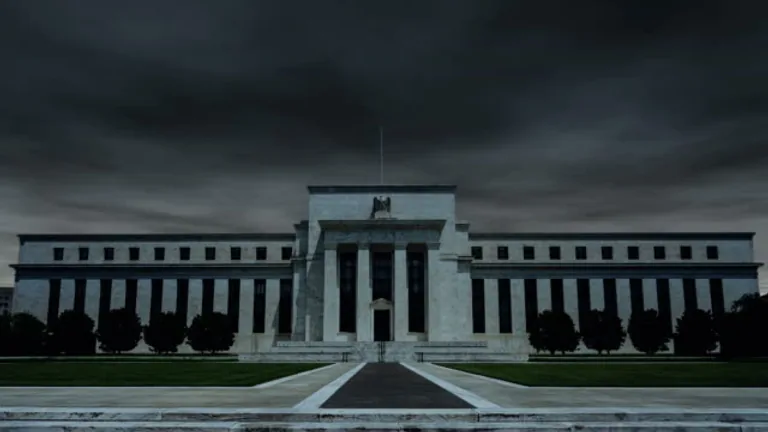
How Quantitative Tightening is Supposed to Work
A short primer on the calculations There’s been a lot speculation around the Fed’s plans for balance sheet reduction, or what we fondly like to call Quantitative...
The currency market trades around the clock on weekdays, which means there is always a session open and always a reason to be flat. It is also the market where leverage is most freely available and most easily misused.
This page covers what actually drives a currency pair, why session selection matters more than it does in equities, and how the mechanics of pips and lots turn into risk.
Currencies trade in pairs, so every position is a view on two economies at once. The dominant drivers are interest rate expectations, central bank policy and the scheduled data releases that move those expectations - inflation, employment and growth figures.
That makes the calendar part of the setup rather than background noise. A swing position in a pair with a rate decision inside the holding period is carrying an event risk that has no equivalent in a stock position held over a quiet week.
The same pair behaves differently depending on which centre is open. The London session carries the largest share of daily volume, the New York overlap is where the major data lands, and the Asian session is typically quieter and more range-bound.
For a swing trader this matters twice: it determines when a breakout has real participation behind it, and it determines when your stop is most likely to be tested on thin liquidity. A level broken during a quiet session is a weaker signal than the same level broken into the London open.
A pip is the standard unit of movement and a lot is the standard unit of size, and the two together give you a value per pip that scales with position size. Because the moves are small in percentage terms, brokers offer substantial leverage.
Leverage is what turns a small adverse move into a large loss. A pair that moves one percent against a position held at high leverage can lose a meaningful fraction of the account. The risk management framework is the same as anywhere else: fix the risk per trade, then derive the size from the stop distance.
Holding a position overnight in forex means rolling it, and the roll includes the interest rate differential between the two currencies. Depending on direction and the pair, that is either a small credit or a small cost to the position.
For a swing trader holding days to weeks this is usually a minor line rather than the reason for the trade, but it is not zero, and on a long hold it is worth knowing which side of it you are on.
Our published archive is thin on currency specifically. What we have is mostly macro and index positioning, so this page sets out the framework rather than pointing at a deep back catalogue of forex articles.
Where currencies come up - dollar strength, rate differentials, the effect of the dollar on commodities and equities - it is in the macro topic and in the Discord.
The market is deep, open around the clock and cheap to trade, which suits multi-day holds. The main risk is leverage, which is freely available and easily oversised.
The London session and the New York overlap carry the most volume and the scheduled data. Levels set during quiet sessions are less reliable.
Size from the risk per trade and the stop distance, not from the maximum the broker allows. Available leverage is a limit, not a target.
The most liquid majors, because tight spreads and deep volume reduce the cost of both entry and exit. Thin crosses are a poor fit for a multi-day hold.
Yes, through the roll, which includes the interest rate differential between the two currencies. It can be a small credit or a small cost depending on direction.
A short primer on the calculations There’s been a lot speculation around the Fed’s plans for balance sheet reduction, or what we fondly like to call Quantitative...
Happy Labor Day weekend, friends! The holiday-shortened week ahead has a fairly light calendar, but there are some economic events and earnings worth watching. Economic...
Trade ideas, cutting edge indicators, live futures streams, real-time market news and a community of traders who share what they learn.