
"Knife Catching" vs Buying a Dip: What's the Difference?
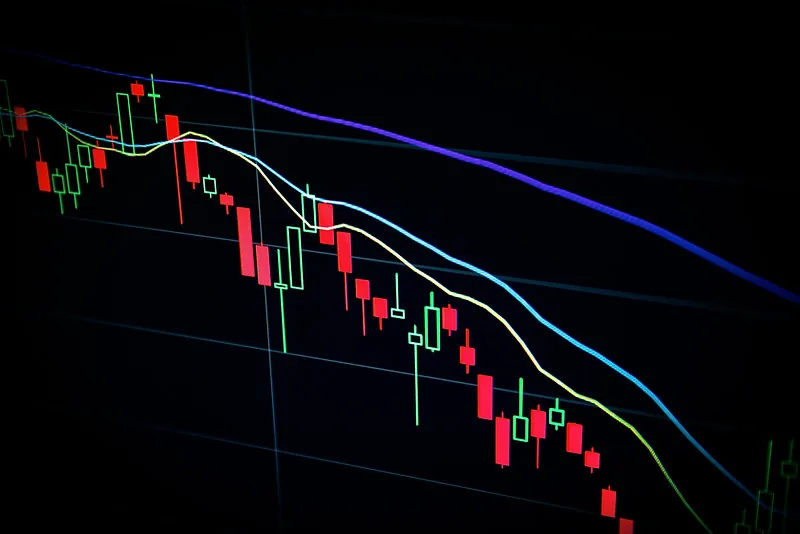
Ever heard the phrase "Don't try to catch a falling knife"? Catching a falling knife is a metaphor used in the stock market to describe the act of buying a stock that is...
Stocks are where most people start swing trading, and for good reason: the market is liquid, the instrument is easy to reason about, and you can trade it in a normal brokerage account without a margin for contracts.
What separates a workable stock swing trade from a frustrating one is mostly selection. This page covers the filters that matter, the catalysts that move a stock, and the one decision - holding through earnings - that has to be made deliberately.
The first filter is not chart shape, it is whether you can get in and out without the market noticing. Look at average daily volume and average dollar volume, and check the typical spread. A stock trading a few hundred thousand shares a day with a wide spread will quietly cost you more in execution than most setups can earn.
The practical test: could you exit your intended position size in one order near the current price? If not, either size down or pick something else.
A liquid stock that does not move is not a swing candidate either. Average true range tells you how far the stock typically travels in a day, and it should be large enough relative to your stop distance that a normal move can pay for the risk.
This is the same number that drives position sizing: if a stock's daily range is wider than your stop, you will be stopped out by noise rather than by being wrong.
A swing trade needs a reason for the move to continue. The usual ones are earnings and guidance, an analyst revision, sector rotation, a product or regulatory catalyst, or simply a strong index trend that carries most of its constituents.
Sector context matters more than most traders assume. A stock breaking out while its sector is falling is fighting the tape, and those breakouts fail more often than the ones with the sector behind them.
Holding a stock swing trade through an earnings release means accepting a gap. The stock can open far from where you planned to exit, and your stop will not protect you at the level you set - it becomes a market order on the other side of the gap.
There are only two defensible choices, and both are fine: close the position before the report, or size it small enough that a gap through your stop is survivable. Holding a full-size position through earnings without deciding which one you are doing is how an ordinary loss becomes an account-changing one.
A workable stock screen for swing trading is short. Liquidity above a floor, price above a floor, average range above a floor, and then a setup filter - near a moving average, breaking a range, or pulling back into support within an uptrend.
Run the same screen each time. The value is not in a clever filter, it is in looking at the same kind of candidate repeatedly until you know how it behaves.
Liquid ones with enough daily range to pay for the risk. Average volume and average true range are the two filters that matter most; sector leaders are usually better candidates than thinly traded names.
Few enough that you can hold every position in mind and size each one correctly. For most people that is three to six, not twenty.
Only deliberately. Either close before the report or size the position so a gap through your stop is survivable. Earnings gaps jump over stops.
No. A cash account works. Margin matters for shorting and for the pattern day trader rule, which applies to frequent intraday trading rather than to multi-day swings.
The daily chart for the setup and levels, the weekly for trend context, and intraday charts only for execution.
Ever heard the phrase "Don't try to catch a falling knife"? Catching a falling knife is a metaphor used in the stock market to describe the act of buying a stock that is...
There are various ways to allocate capital to a portfolio and everyone seems to have their own method. There’s probably only a few ways to get this wrong. But, many ways...
Short selling is one of the most challenging strategies in the market because, as we all know, the path of least resistance for the market is up. There is an art to it...
We've seen a lot of intense short squeezes over the last week, many of which seem to be coming to a rather unceremonious end. What is a short squeeze? When there's a...
A long short delta neutral portfolio strategy is a risk management technique used by traders and portfolio managers to reduce the overall risk of a portfolio during...
Momentum trading strategies favor using the trajectory of prior price action to determine where prices may be heading next. Those same strategies can be potentially...
Trade ideas, cutting edge indicators, live futures streams, real-time market news and a community of traders who share what they learn.