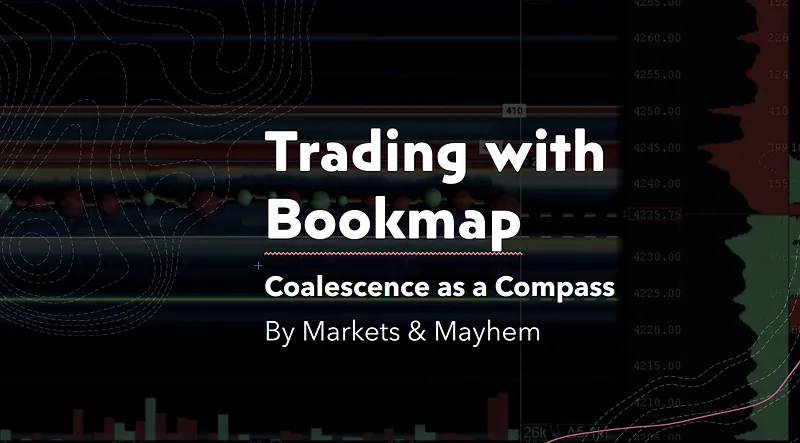
If you missed today's event in the Discord featuring Bruce from Bookmap, make sure to check out the replay! The video quality isn't the greatest in spots, but the Bruce's insight into how traders use their software is very informative:
What the video covers
In a Discord session with Bruce Springle of Bookmap, the host opened by stressing the event was educational and entertainment only, not financial advice, before asking Bruce for a plain explanation of the software. Bruce argued Bookmap is simpler than it looks, built on three parts. The first is streaming best bid and offer, which he calls pure price action. A candlestick or volume bar only shows open, high, low and close for a period, so everything inside that period stays hidden. Overlaying the live bid and offer onto a five-minute chart, he walked through bottoming patterns, breakouts and pullback zones that the candle alone does not reveal. The second part is volume: green dots mark market buys, red dots market sells, and dot size shows how much traded, giving context on how volume lines up with price structure.
The third element covers stops and icebergs in a sub-chart. Bruce was candid about limits. The Think or Swim version uses dxfeed data, which he rates as high quality but not MBO data, so users lose access to Bookmap's add-ons, and stop data isn't available there either, requiring Rithmic and CME-only markets. The host added that scalpers on very short timeframes and swing traders hunting liquidity areas could both find it useful. Bookmap trades bar-level aggregation for streaming order-flow detail you can act on.
Three things to remember
- Bookmap layers streaming best bid and offer plus volume dots onto the chart to expose the price structure and order flow that candlestick bars hide.
- Green dots are market buys and red dots are market sells, with dot size showing how much traded so you can compare relative volume across price areas.
- The Think or Swim version runs on dxfeed rather than MBO data, so it lacks Bookmap's add-ons, and stop data requires Rithmic and CME-only markets.