Swing Trading 101
The basics of swing trading and how to improve your odds of success.
Swing trading is holding a position for days to weeks to capture the part of a trend between the pullback and the next leg. You are not trying to scalp ticks and you are not holding through a full cycle - you are trading the swing.
This page is the starting point for the whole subject. It explains how the style works, what separates it from day trading and position trading, and which of the four decisions actually determines the outcome. Each section links to the deeper hub for that asset class or technique.
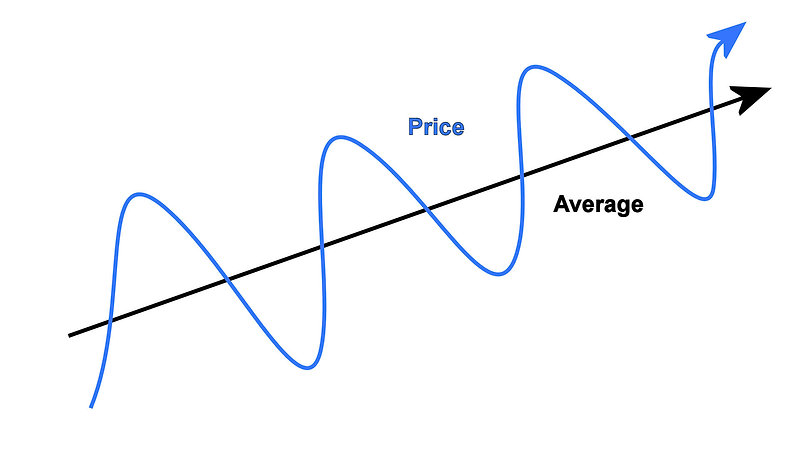
Markets do not move in straight lines. A trend advances, stalls, pulls back, then resumes. Swing trading takes the middle of that rhythm: you enter after a pullback has finished and exit before the next one is due, holding through the overnight sessions in between.
The holding period is what defines the style. A day trader closes before the bell and takes no overnight risk. A position trader holds for months and accepts deep drawdowns along the way. A swing trader sits between them, typically two days to several weeks, which is long enough for a move to develop and short enough that your capital is not locked up for a season.
It also fits how most people actually live. Decisions are made on the daily chart after the close, not in front of a screen at 10am, so it works alongside a job in a way that intraday trading does not.
Which market. Liquidity, volatility and whether there is a catalyst. A thin market with a wide spread will cost you more than the edge is worth. See swing trading stocks, options, futures and forex.
Which setup. A pullback in an established trend, a breakout from consolidation, a reversal at a level that has held before. The setup is only a reason to look - it is not the edge on its own.
Where the stop goes. A stop is not a number you pick because you can afford it. It goes where the idea is proven wrong, at a structural level, and the position size follows from that distance. See risk management.
How big the position is. This is the decision that most often separates a survivable account from a blown one, and it is the one most often skipped.
Swing trading uses more than one chart on purpose. The weekly sets the context - is the instrument in an uptrend, a downtrend or a range. The daily is where the setup and the levels live. Intraday charts are for execution only: getting a sensible fill, not for finding the idea.
Mixing those roles is a common failure. If you find the trade on a five-minute chart and then hold it for a week, you are running an intraday decision against overnight risk, and the two do not belong together.
The setup gets the attention, but over a large number of trades the difference between a profitable swing trader and an unprofitable one is usually risk management and consistency rather than pattern selection.
That means a position size small enough that a normal losing streak does not change how you trade, a stop placed where the idea is wrong rather than where it is comfortable, and a written plan you follow when the position moves against you. A modest edge with disciplined sizing beats a better edge applied inconsistently.
Holding a position for days to weeks to capture the middle of a price move, rather than closing the same day like a day trader or holding for months like an investor.
Usually two days to several weeks. Anything closed before the close is day trading; anything held for months is position trading.
It can be, but no setup guarantees an outcome. Results depend on the edge, the position sizing and the consistency of execution. Nothing on this site is a promise of profit.
Swing trading usually fits better around a job because decisions are made on the daily chart after the close, and it takes far fewer trades to learn from. The trade-off is overnight gap risk, which day trading avoids.
Enough that a normal losing streak does not force you to change your sizing. Many brokers have no minimum, but the constraint that matters is risk per trade, not account size.
The basics of swing trading and how to improve your odds of success.
I love trading indicators. I enjoy coding my own and learning from other coders about strategies they are working on systematizing. Over the past few years I've been...
The 1% rule is a key risk management strategy for swing traders, where a trader aims to limit each loss to 1% of their portfolio's value. This simple, but nevertheless...
Stop orders, commonly known as stop-loss orders, are instructions to buy or sell a security when its price reaches a specific level or threshold. They are essential in...
Trading is often romanticized as a quick pathway to financial freedom, yet the reality is far more sobering. Everyone ends up paying a tuition to the market, but not...
Mean reversion is a trading strategy based on the assumption that asset prices tend to revert to their mean or average over time. It is used by traders and investors...
Trade ideas, cutting edge indicators, live futures streams, real-time market news and a community of traders who share what they learn.